We're Bringing Tending to AZ!

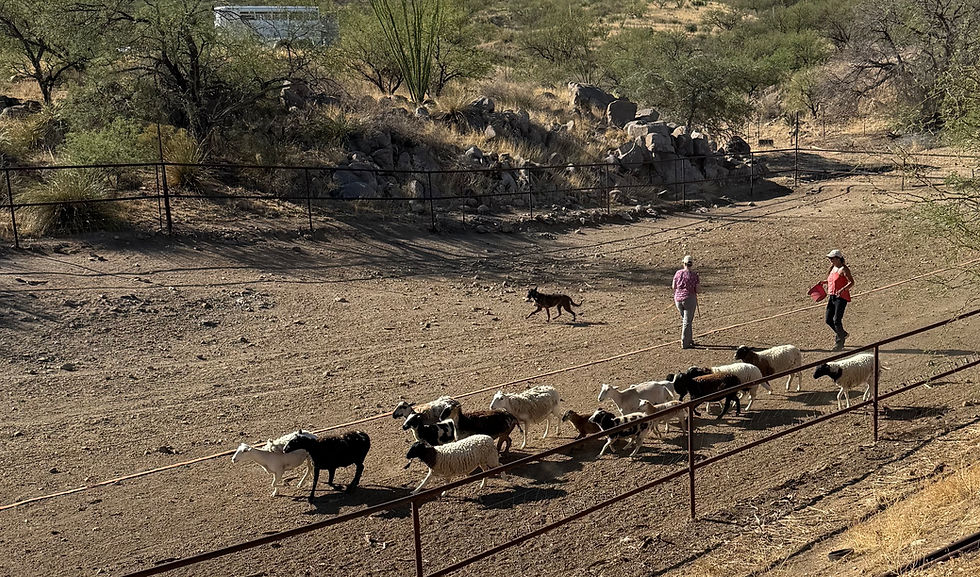
Two years ago, a student came to me with a young Beauceron. I didn’t know much about tending-style herding at the time — the boundary-based work practiced across Europe by traditional shepherds using dogs like Beaucerons, German Shepherds, and Belgian breeds — but the dog was telling me something. I wanted to listen. So I drove to a weeklong tending workshop in northern Colorado to learn more. It was fascinating and incredibly eye-opening.
But then the student stopped coming. I didn’t have another dog to work in that style, and as it goes, life moved on.
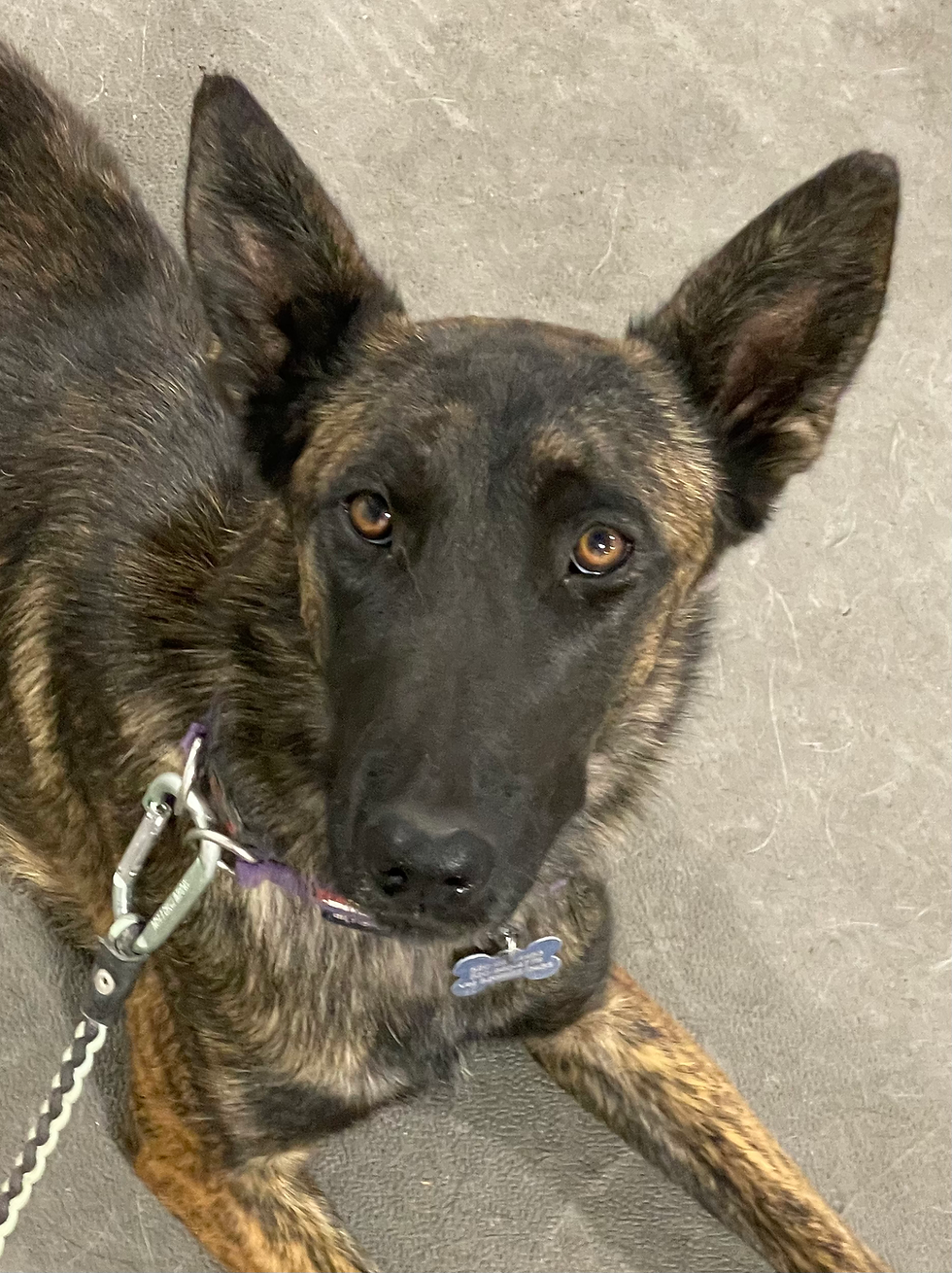
Fast forward to now. Trigger, my one-year-old Malinois-Dutch Shepherd cross, recently got her turn on sheep — and she lit up. The kind of lit up that makes you pay attention. Something clicked, and I thought, maybe it’s time to revisit what I started.
So we’re trying again.
I'm working remotely with the same trainer in Colorado that I met two years ago (thank you, Val Manning of Terra Norte German Shepherds!), I’m digging into old European herding manuals, the history of the German Shepherd Dog, books on shepherding in France, and tracking insights from European tending groups online. It’s part fieldwork, part research project, and let's face it, a bit of obsession ;)
And I did the unthinkable and bought goats because my sheep don't work properly for tending dogs.
Because here’s the thing: tending dogs aren’t the same as gathering breeds like Border Collies, Aussies, or Kelpies — and trying to work them the same way sets everyone up to fail.
Tending vs. Gathering: What’s the Difference?
Gathering breeds are designed to bring livestock to the handler. They flank, outrun, and often operate on eye and pressure, actively collecting and pushing animals in a coordinated arc. These are your gather-and-drive dogs — fast-footed, tightly tuned to movement, and quick to read and respond to shifts in the flock.
When we think of herding in the US, Canada, UK, And Australia, these are the dogs we imagine.
Tending breeds come from a different cultural landscape, where shepherds spent their day with their sheep, where shepherding depended on people and dogs rather than fences - and as we are all slowly learning, this kind of livestock care is more envionmentally integrated, and helps safeguard predator, and livestock, in a manner superior to the containment systems we use here in the US, but, I digress.
Tending breeds evolved in a different working context. Their job wasn’t to gather livestock, but to hold a boundary. These dogs patrolled a designated perimeter, often with minimal direction from a human, keeping flocks from wandering into crops or danger. They had to show independent judgment, directional commitment, and endurance over miles of terrain. Their work involved long, straight lines, pacing flocks slowly along open edges, and preventing escape without scattering the stock. In short: more fence line than finesse.
That’s a fundamentally different job — and one that often gets ignored.
If you’ve got a dog from one of these breeds and they are over the top aroused and trying to be a murder monster or seem to disengage under classic herding methods, it’s not always about lack of instinct. It may be about asking the wrong questions. These dogs are bred for trotting the boundary, not affecting sheep (we would call that off-contact in the gathering world) for long periods, pushing sheep in a strung out line along a roadside, calmly with soft eyes and body language. They do not want small groups and tight spaces. This brings out their predatory drive, They wants lines, off-contact work with large calm groups, not tight, arcing movement on skittish stock. When you put them on the kind of work their ancestors did — that’s when the lights come on.
Right now, we’ve got a small but dedicated crew working together on Tuesday mornings: Trigger, of course, along with Laney the Beauceron, Crisis the Belgian Tervuren, and Sara, a Canaan Dog I tried to do gathering work with a few years back — she wasn’t interested then, but this new approach may be working more within her instinctual skillset..
This fall, I plan to offer a small series of tending-focused classes. Not just herding lessons, but context: what these dogs were bred to do, how their minds work, and how to support them through work that fits. It’ll be for people with tending breeds, for those curious about this style, and for anyone who’s ever looked at their dog and thought, you need something more.
We’re just getting started. But if you’re ready to explore a different kind of working partnership, keep an eye out. Honoring our dogs' instincts are the most powerful tool to Help Them Live Their Best Lives, no matter what direction that takes us.


keo nha cai ừ thì mình cũng ghé ngang đúng lúc đang rảnh, thấy mọi người bàn tán nên vào lướt vài vòng cho biết, kiểu xem trang nó tổ chức ra sao thôi chứ nội dung thì mình không đào sâu lắm. Cảm giác đầu tiên là menu đặt ngay chỗ dễ liếc, bấm qua lại giữa các mục không bị lạc đường, giống như đi siêu thị mà biển chỉ dẫn treo đúng tầm mắt vậy (đỡ phải làm thám tử). Mình để ý thêm là các khối thông tin họ xếp theo cột nhìn gọn, tiêu đề với số liệu tách ra rõ nên đọc lướt vẫn bắt nhịp được, không phải kéo lên kéo xuống để…
I'll be very interested in hearing about these tending breeds and their styles even though I have a somewhat gathering breed of dog (ACD). Many kudos for seeing this possibility and working to make it happen. You rock! - Peg