The Value of scentwork
- Liane Ehrich, CVT

- Jul 29, 2025
- 3 min read

Follow Your Nose: Why Scent Work Matters (and Why We Love It)
There's something special about seeing a dog engage their sense of smell. Their breathing changes. Their body language shifts. You can see them thinking—but not with their eyes or ears. They’re thinking with their nose.
And if what we're seeing on the outside is cool - the enthusiasm, drive, and focus - what's going on inside is even more incredible!
Scent work engages the olfactory bulb—one of the largest parts of a dog’s brain—and lights up their limbic system, the emotional center. The simple act of sniffing reduces cortisol, increases optimism, and gives dogs a way to interact with the world that’s biologically appropriate, mentally enriching, and emotionally grounding.
Which is why we use it for everything from nervous nellies, to active seniors to high-octane sport dogs. And why it’s not unusual to see a Malinois, a Border Collie, and a reactive mixed breed all working the same class, each finding joy in their own way.
What is scent work?
In class, we teach dogs to find essential oil odors—birch, anise, and clove—hidden in containers, outdoor spaces, vehicles, buried in dirt, and even in a bucket of water. It’s like hide-and-seek for dogs, except we’re asking them to tell us what only they can smell. We follow both ASCA (Australian Shepherd Club of America) and AKC rules as a framework:
AKC: indoor, outdoor, containers, buried, and water
ASCA: indoor, outdoor, containers, and vehicle
We rotate scent exposures as they go. Dogs in our intro class get a foundation in all three target odors. In later classes, we work birch alone, then clove and anise, layering complexity as they go.
Why scent work works
Scent work is incredible for dogs with big feelings. One of my students has been working with a strongly reactive dog—dog/dog reactivity, arousal overload, lack of focus, the works. Scent work gave him something he could do with clarity and success. He’s now preparing for his first trial.
Cody, my 11-year-old Border Collie, is just starting her scent journey. She’s had a long and brilliant career in herding, but her body is starting to say no to our hard ground. Still, she wants to work. So scent detection gives her a retirement job that honors her drive without taxing her joints. She gets to use her brain, work independently, and light up every time she makes a find.
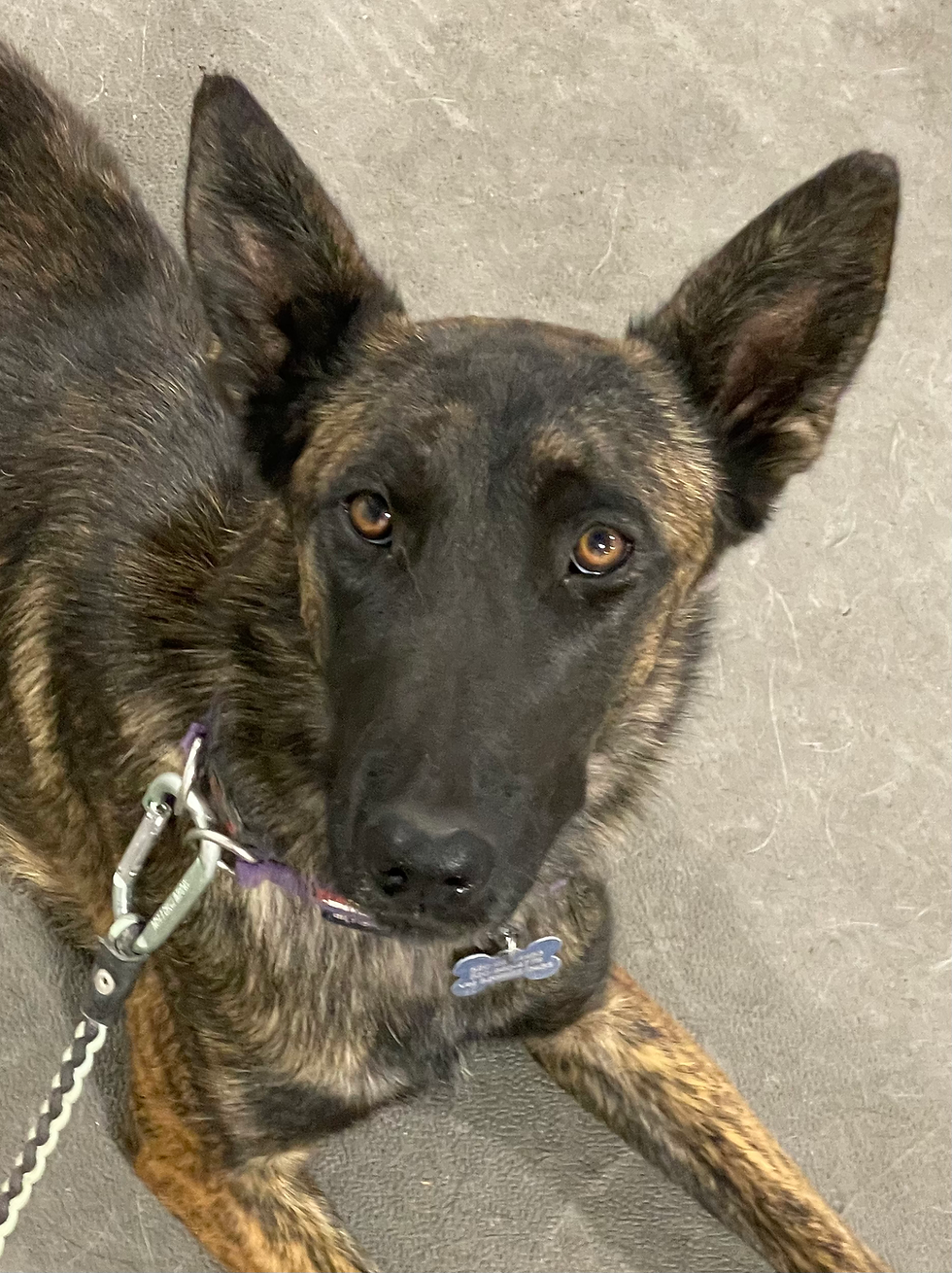
Trigger, on the other hand, is a different kind of challenge. She’s my young Malinois x Dutch Shepherd cross, and she’s ALL about me. Not usually a problem, but I need her to feel confident at distance. Scent work is helping her detach from me. She’s learning to trust the work, not just the handler. That independence is vital for the kind of sports she’s being prepped for: Schutzhund, IGP, and herding. She needs to develop problem-solving skills and persistence, not just handler focus. Scent work gives her the space to build those habits in a lower-pressure environment.
And then there’s Brisco. Brisco is one of those dogs who just wants to do whatever I want to do. And he wants to do it perfectly every. Single. Time! He's learning in scentwork to trust himself. Another tool in our toolbox - helping him mature into the confident powerhouse I know he can be.
The science is clear
A 2019 study from the University of Veterinary Medicine in Vienna showed that dogs who engaged in nose work showed increased optimism on cognitive bias tests—meaning they were more likely to expect good things to happen, even in ambiguous situations. Another 2020 study showed that dogs engaged in regular scent training had lower baseline stress levels and were better able to handle new challenges.
Think of how powerful a tool scentwork is if it can lower overall stress. And, it's fun, and the dogs love it. There are so many wins here!
What to expect in class
Our scent work classes are small, structured, and tailored to your dog’s current level of experience. Whether your goal is to eventually title or just to give your dog a meaningful job, we meet you where you are.
Classes are supportive, low-pressure, and incredibly fun. .Your dog will learn to find scent, they will gain aptitude, and confidence. You will learn to read your dog's 'tells', when theyre on scent, when theyre confused, when theyre sure. You will both come away stronger partners.


Comments