Building a good bite


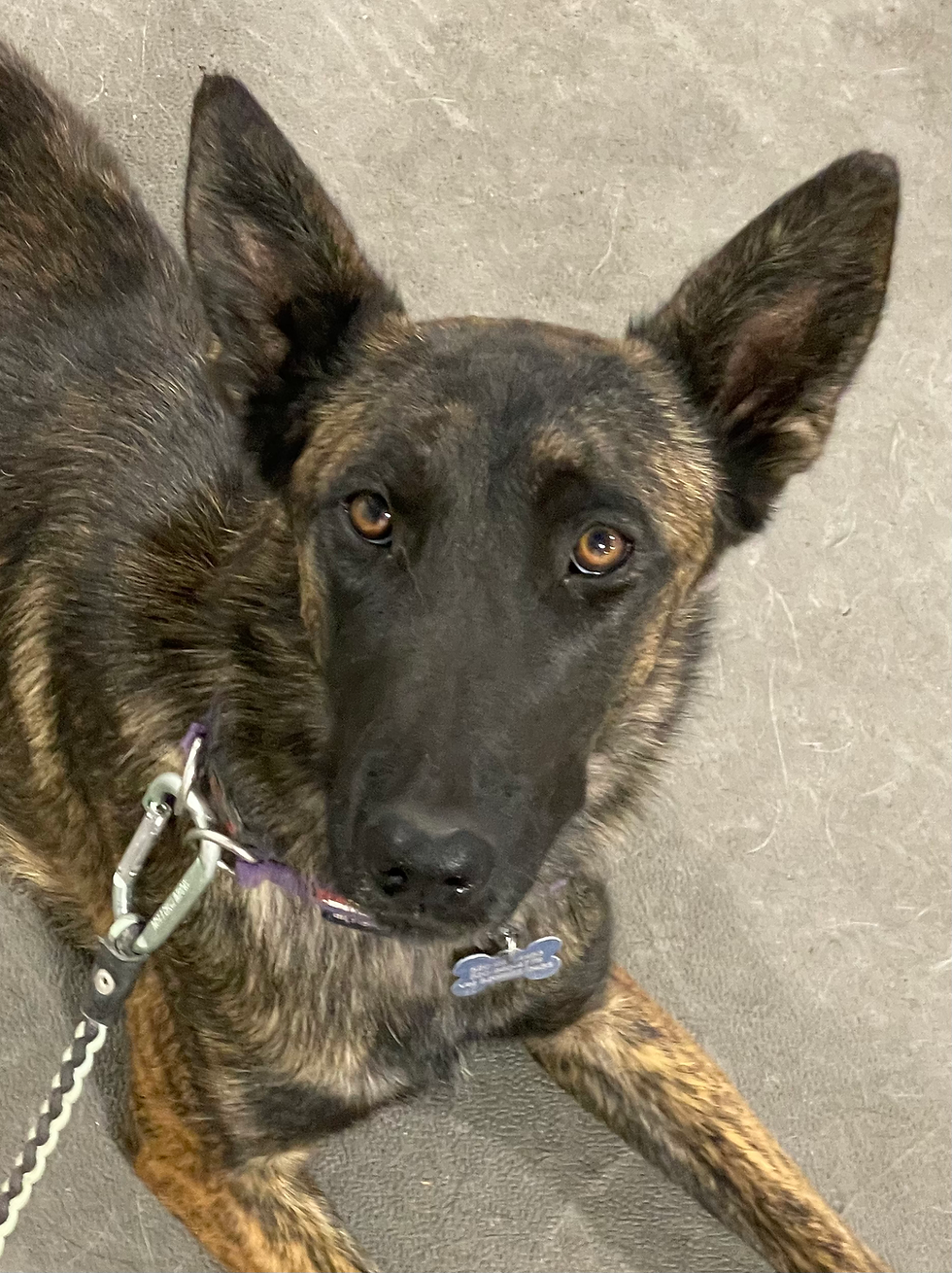
A month ago, I trialled Brisco at one of our local trials. He knew the sheep, and I was there to help. I had no illusions about winning, I just wanted to build his confidence and let him have a good run.
He did a lovely outrun, lift and fetch, but then halfway down the first drive the sheep broke back and began to run. This can be a problem with Brisco, but we’d been working on it. I sent him. He started off well, but the sheep were accelerating. His tail went up, but I thought he was at the front sheep’s head. He wasn’t. He split the flock, and ran at a sheep, grabbing it in desperation as it fled up the field. The Judge yelled Thank you at the same time I called him off.
We had been working on his gripping (biting sheep inappropriately) but apparently still had work to do.
Brisco isn’t gripping because he’s mean, or alpha, or wants mutton for dinner. He bites (as do pet dogs) because in a moment of heightened arousal - usually fear or anxiety - he runs out of options.
My job is to show him those options.
Brisco is a dirty gripper, meaning that his grips are not coming out of control and confidence, but rather they come from stress. A sheep staring at him intimidates him. He panics and finds another sheep, a sheep looking away and grips that sheep. This is why many dog bites in homes happen when the person has turned away from the dog - it’s not nipping heels, and herding - it’s fear put into action when the greater threat (the person facing them) is removed.
Gripping in this way can build relief. It’s like screaming and pounding your fists when frustrated - it feels good. The problem is that as good as you feel afterward, the problem still remains, and if screaming and pounding your fists happens at the wrong place it can affect your life. That’s how gripping out of context affects dogs like Brisco.
In herding a dirty grip is thanked and asked to leave the field. In a pet house it can lead to human injury or worse and rehoming or euthanasia.
Biting without purpose - regardless of context - is always problematic.
First, before we can solve the problem we have to find the underlying emotion. In pet dogs in almost all cases - it’s fear of some sort. Either fear of the person or dog that is too close, or fear that that person or animal will take away something important to the dog (resource guarding).
In the case of most stock dogs the underlying emotions can also be broadly examined as fear. We label it anxiety - fear of an unknown future - the sheep are about to escape, I’m about to be challenged, etc..
The solutions in both cases is to affect the behavior from three places: prevent the behavior - this is management - not setting the dog up for failure; show the dog a better solution to unwanted emotions - letting the dog feel fear and anxiety in small easy to solve doses; and lastly building up the dog’s emotional resilience so that these emotions are encountered less frequently.
I can show you, briefly, what that looks like in Brisco’s case.
First, management. I set my phone timer for 15 minutes because he would grip frequently when tired. I would also watch him closely and call his run earlier if I thought it was prudent. I am also doing this with a student’s human aggression dog - we never work longer than 30 minutes at present. She actually noticed her dog becoming reactive at a certain time point in our work before I did. A tired dog cannot work well.
With Brisco, I also paid attention to what caused gripping (sheep escaping, hard work with lot’s of pressure ) and avoided setting those up accidentally.
This is a process, and it is done with the full knowledge that there will be failures from time to time.
Second, I set up problems with care so that they are hard enough to be challenging, while being solvable. Recently, I decided that he could hold the sheep off me while I feed them. The sheep are always starving - every meal is the first and last they’ll ever see - and they’ll mob me. A good dog has presence to move them away, but jumping in and making a mess makes things worse. By keeping these sessions short and goal oriented, Brisco can gradually overcome his anxiousness of sheep bearing down on him. By me being right there to support him, I take away the fear he has at distance when he has to make decisions on his own.
Last, I teach him he has power. He can stand his ground. He can boop a nose. He needs to learn that he can affect the sheep. His job is to move sheep away from him in a controlled manner. When they violate his picture of what this looks like, he panics. I need him to see that no matter what the sheep do, he is still in control. If a sheep stares at him he does not need to freak out and go bite a completely unrelated sheep. He can stand his ground, walk into the sheep. His power will negate the need for gripping.
These things, depending on the dog, and their skill level, can take time. It didn’t take a day for Brisco to develop this habit, and it won’t take a week for him to replace it. There are genetics at play here as well.
But yesterday, I walked into the sheep with Brisco and a bunch of hay. The sheep crowded me, and one of the newer sheep gave Brisco a pretty hard stare. I stood, holding the hay, Brisco at my side, and asked him to walk up. He popped the sheep right in the nose with his open mouth. He didn’t close his mouth, he didn’t pursue. I stopped him, and praised him. This is power, and the more Brisco recognizes how much he has, the less he’ll feel inclined to panic and fly in.
The same is true of pet dogs - obviously with biting pet dogs the stakes are higher - the management piece cannot fail. But power, not more fear is the answer. A strong dog doesn’t need to grip. Anxious, confused, and worried dogs grip, and strength is the answer.


Comments